Fintech, or financial technology, has really made money transactions easy and clean. Apps like Google Pay have made our lives much easier. We don’t have to carry around cash. Even if the transaction amount is Rs. 1, we can pay that with our app.
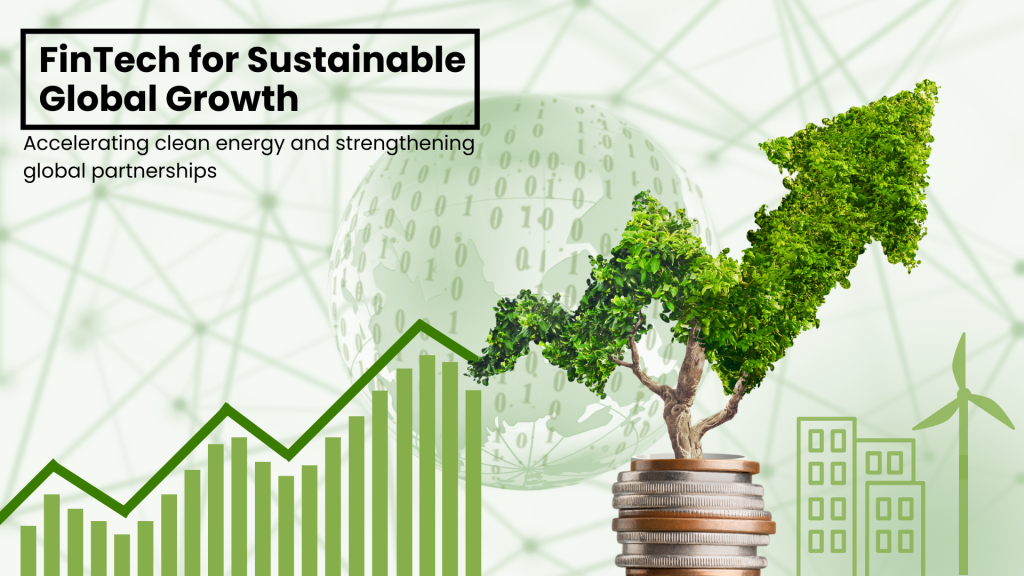
But would you believe me if I say that clean payments also lead to clean energy, and thus a clean environment? In this study, the authors Ms. Priya Choudhary and Dr. (Ms.) M. Thenmozhi from the Department of Management Studies, Indian Institute of Technology (IIT) Madras, Chennai, India [Dr. (Ms.) M. Thenmozhi is also Head, CAMS-IITM Fintech Innovation Lab, and Coordinator, IITM Nodal Center, National Initiative for Capacity Building of Faculty, IIT Madras], want to find a proper answer to the question – does fintech drive sustainability?
Sustainability is a big issue nowadays, because of the depletion of natural resources, and the effects of unsustainable economic activity on climate change, the need to find a solution to this problem has never been more urgent.
The United Nations (UN) adopted 17 Sustainable Development Goals (SDGs) in 2015, to be achieved worldwide by 2030. These goals include – No poverty (SDG 1), Zero hunger (SDG 2), Clean water and sanitation (SDG 6), etc. The purpose of these 17 global goals is to bring about “peace and prosperity for people and the planet”, tackling climate change, and working to preserve oceans and forests.
In this study, the authors particularly focus on the impact of fintech on – affordable and clean energy (SDG 7) and global partnership for the goals (SDG 17).
Although some studies have examined the relationship between fintech and sustainable development, empirical evidence has been scarce. Therefore, in this study, the authors have examined the influence of fintech on clean energy and global partnerships across 67 countries from 2010 to 2021 using fixed-effects panel regression method.
Previous studies focused on carbon emissions and renewable energy financing, but not on its influence on the overall SDG 7 index. To the best of the authors’ knowledge, this is the first study to examine the impact of fintech on the composite SDG 7 index, which captures a broader and more integrated view of energy-related sustainability. The results of this study showed that fintech has a significant positive impact on affordable and clean energy. It also plays a significant role in supporting global partnerships.

Fintech serves as a crucial catalyst in supporting the transition toward a low-carbon and sustainable economy by facilitating green financing, improving access to capital for renewable energy projects, and enhancing energy efficiency. By supporting global partnerships, fintech has modernized financial infrastructure and democratised access to finance and innovation.
The influence of fintech on clean energy and global partnerships varies across nations. The positive impacts of fintech on clean energy is more pronounced in developed nations. Its impact on global partnership is more pronounced in less developed countries. Fintech has a more profound impact on clean energy in developing countries.
Fintech has a positive, significant influence on global partnerships (SDG 17) in both developed and developing nations, underscoring its broad relevance in fostering international collaboration. Future researchers could investigate the impact of fintech on other SDGs.
Article by Akshay Anantharaman
Click here for the original link to the paper