Studies in genetics have come a long way. The Human Genome Project (HGP) was a groundbreaking initiative that opened the doors for scientists worldwide. This ambitious project aimed to map, sequence, and understand all the DNA in the human genome. Scientists from all over the world collaborated to achieve a single goal – to map the human genome. With the knowledge of the entire human genome, more disease-causing genes could be identified. The Human Genome Project also helped to develop new DNA technologies, and laid the foundation for personalised and precision medicine.
But what is genetics exactly? And what is a genome? Genetics basically explains how traits (such as eye colour, height, etc.) are passed from parents to offspring, and why individuals differ at the biological level. A genome is the complete set of DNA in a person.
In genetics, gene-gene interactions play an important role in determining the traits of a person. They also explain why some people are more prone to getting a disease than others. They also help us to understand how biological pathways and evolutionary processes work.
One of the main terminologies used in genetics is – genotype and phenotype. While genotype refers to a person’s genetic makeup, or specific DNA sequence, phenotype refers to the observable trait or characteristic, such as hair colour, eye colour, height, etc. Simply stated – if genotype is the recipe/blueprint, phenotype is the final dish.
Although there have been many studies on gene-gene interactions, not much is known about their interactions at the molecular level. This knowledge is essential to identify novel functional targets that can be used to modify complex traits, particularly in diseases influenced by multiple interacting genes and their variants.
Single Nucleotide Polymorphisms (SNPs), which are the most common type of genetic variation found in DNA, were considered in this study. In order to understand SNPs, consider an example where the DNA sequence in some people may be:
ACTGA
While in others it is:
ACAGA
Here, ‘T’ is replaced by ‘A’ at the third position (A – adenine, T – thymine, C –cytosine, and G – guanine are the base pairs found in DNA). This change, ‘T’ replaced by ‘A’, is called an SNP.
SNPs occur at approximately once every 300 base pairs in a human genome.
SNPs are important as they serve as genetic markers for identifying disease-associated genes. They are also used in Genome-Wide Association Studies (GWAS) and in personalised medicine.
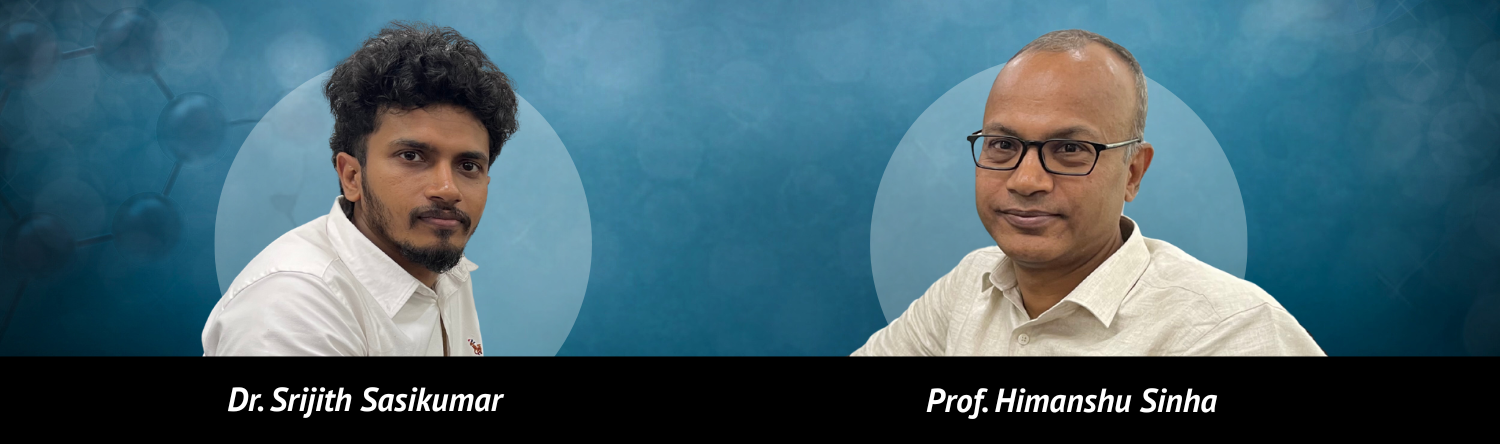
In this study, the authors Dr. Srijith Sasikumar and Prof. Himanshu Sinha from the Systems Genetics Lab, Department of Biotechnology, Bhupat and Jyoti Mehta School of Biosciences, Indian Institute of Technology (IIT) Madras, Chennai, India [Dr. Srijith Sasikumar and Prof. Himanshu Sinha are also affiliated with the Centre for Integrative Biology and Systems Medicine (IBSE), IIT Madras, Chennai, India, and the Wadhwani School of Data Science and Artificial Intelligence (WSAI), IIT Madras, Chennai, India], Prof. Shannara Taylor Parkins, and Prof. Suresh Sudarsan from The Novo Nordisk Foundation Centre for Biosustainability, Technical University of Denmark, Lyngby, Denmark, have set out to answer the question: do interacting SNPs function independently through their respective functional networks, or do they activate latent molecular pathways when combined?
While biparental yeast populations have been used in the past to find genetic networks among gene variants, the mechanisms by which genetic interactions have an impact on phenotype remain overlooked. In this study, yeast, Saccharomyces cerevisiae, was used to study the efficiency of a developmental process in yeast called sporulation, which is also a metabolic complex trait, and to identify the phenotypic and molecular effects of genetic variants and their interactions at the SNP level.
A systems genetic approach, integrating multi-omics data such as transcriptomics, proteomics, and metabolomics, was used to overcome the challenge of understanding the complex interplay among these intermediate phenotypes and their impacts on biological processes. In recent times, the integration of multi-omics information has guided targeted therapies in discovering biomarkers for cancers and other complex diseases. Furthermore, studies in model organisms and humans have demonstrated that gene and protein expression variations are highly context-specific, varying by developmental stage. Despite significant advances, most studies investigating the molecular basis of genetic interactions in yeast have focused on gene expression at a single time point. Therefore, understanding the temporal phase during which causal genetic variants exert their molecular efforts is critical for understanding genotype-phenotype relationships.
The SNPs considered in this study were – MKT189G and TAO34477C. It was found that when these two SNPs were combined, they activated the arginine biosynthesis pathway and suppressed ribosome biogenesis, reflecting a metabolic trade-off that enhances sporulation efficiency.
The arginine pathway is essential for mitochondrial activity and efficient sporulation only in the double-SNP background.
It was noticed that both SNPs were needed to activate the arginine biosynthesis pathway. This indicates distinct evolutionary dynamics. The near-fixation of MKT189G in S. cerevisiae suggests it confers an adaptive advantage, particularly in stress-related contexts, as has been shown in previous studies. In contrast, the TAO34477C variant is extremely rare, implying it may be deleterious in most backgrounds or advantageous only under specific environmental or genetic conditions while having an effect size similar to a common variant.
The findings of this study provide a conceptual framework for understanding how genetic interactions can reconfigure cellular metabolism to activate latent pathways. This work emphasizes the importance of resolving variant effects in combinatorial contexts and demonstrates how integrated multi-omics approaches can uncover the molecular logic underlying complex trait architecture.
Prof. Ullas Kolthur-Seetharam, who is a J. C. Bose Fellow, and affiliated with the Tata Institute of Fundamental Research (TIFR), Hyderabad, India, gave the following appreciative comments on the work done by the authors of this paper: “The study elegantly bridges evolutionary biology and systems genetics, illustrating how rare and/or common alleles can interact to confer context-dependent fitness advantages; a mechanism that may explain how genetic diversity is maintained in natural populations and how adaptation occurs under changing environments.”
“This research underscores the power of integrated multi-omics approaches to decode the complexity of life. It sets a methodological precedent for studying developmental, metabolic, and disease-related traits across species, from yeast to humans, by capturing dynamic molecular rewiring in response to genetic variation.”
“This work fundamentally shifts how we view polygenic traits, showing that genetic interactions don’t just sum their effects and demonstrate how they can unlock entirely new biological pathways. Besides providing a new framework for such analyses, this paves way for new efforts for understanding complex phenotypes, and in the case of humans, complex diseases like diabetes or cancer, where multiple genetic variants likely interact to alter metabolic states in unexpected ways.”
Article by Akshay Anantharaman
Click here for the original link to the paper