
There are about 37 trillion cells in the human body, all working together in perfect harmony and synchronization. It is only natural for scientists to want to understand and learn from the structure and function of cells. For this, cell patterning is very important.
Cell patterning is a biological process by which cells become organized into specific spatial arrangements within a tissue, organ, or organism. It determines where different types of cells are located and what roles they perform.
Cell patterning helps to understand cell-cell interactions, cell-environmental interactions, cellular heterogeneity, and investigate cellular developmental stages. It also enables the creation of high-throughput (a system’s capability to produce a large volume of data or sample rapidly and efficiently) assays to understand the effects of different biomolecule delivery into cells.
2D (two-dimensional) cell patterning has usually been done. However, 2D cell patterning has many drawbacks such as, the techniques being expensive and time-consuming, and achieving low patterning efficiency.
Also, in the case of cellular and cancer research, 2D techniques inadequately mirror physiological conditions in clinical trials. The absence of cell-to-cell or cell-matrix interaction hinders replication of the natural tumour microenvironment.
To overcome these constraints, researchers are looking to 3D (three-dimensional) cell culture methods, which are necessary for studying tumours, tissue engineering, and fundamental biology. Since 3D culture can replicate the structure and functions of tissues, it has drawn considerable interest in the biomedical field.
Tissue engineering requires five factors – cells, scaffolds, signalling molecules, vascularity, and mechanical stress. These five factors lead to the “diamond factors for ideal regeneration”.
Of these factors, the scaffold can recreate the heterogeneity of specific tissues, and promote cell-cell and cell-matrix interactions. The most important aspect of scaffolding is that it provides architecture.
Of all the materials to be considered for the scaffold, and especially for human tissues, hydrogels fit the bill because of their closeness to ECM (extracellular matrix) [ECM is a complex, non-cellular network of proteins and other molecules that provide a structural scaffolding] properties, and they provide an ideal environment surrounding the cells. However, hydrogels are static in nature, and hence, there is difficulty in obtaining the exact heterogeneity of the tissue.
This problem is answered by the use of photosensitive hydrogels. Gelatin methacryloyl (GelMA), a prominent light sensitive hydrogel, has been used in this study.
By utilizing a photo-crosslinking system, which includes a photoinitiator, GelMA can be used to fabricate 3D patterned micro-structures that encapsulate cells.
Engineered tissue constructs are developed by embedding cells within synthetic or biological 3D scaffolds. Researchers have focused on controlling the spatial organization of cells in defined micro-architectures, with various techniques developed for achieving 2D cellular alignment on micro and nanostructured surfaces. However, achieving 3D cellular organization remains a challenge.
This work establishes a groundbreaking methodology for high-throughput 3D cell patterning, enabling the simultaneous organization of both individual cells and cellular clusters within photosensitive hydrogels while maintaining optimal cell viability.
A massively parallel approach was done, which represents a significant advancement in cell patterning technology, offering unprecedented capabilities for precise spatial organization of cells in three-dimensional environments.
This device could be used to model complex biological tissues with non-linear, anisotropic characteristics and for micro-compartmentalized 3D geometries, making it especially suited for replicating intricate structures such as curved heart muscle fibres and vascular bifurcations.
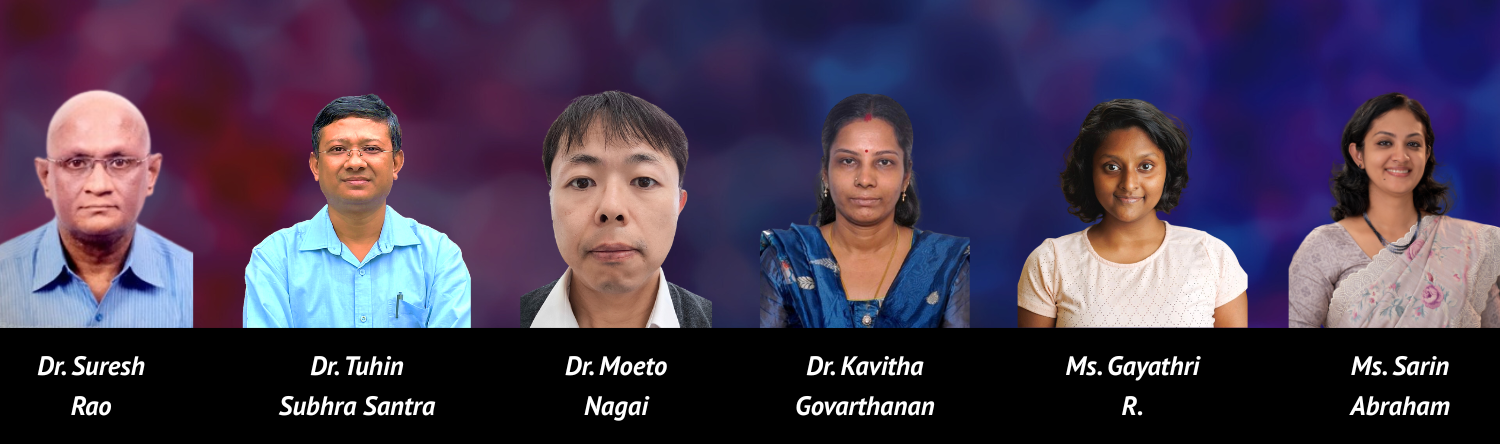
The following are the authors of this study:
- Ms. Sarin Abraham from the Department of Engineering Design, Indian Institute of Technology (IIT) Madras, Chennai, India.
- Ms. Gayathri R. from the Department of Engineering Design, IIT Madras. Ms Gayathri R. is also affiliated with the Department of Mechanical Engineering, IIT Madras.
- Dr. Kavitha Govarthanan from the Department of Engineering Design, IIT Madras.
- Dr. Suresh Rao from the Department of Engineering Design, IIT Madras.
- Dr. Moeto Nagai from the Department of Mechanical Engineering, Toyohashi University of Technology, Aichi, Japan.
- Dr. Tuhin Subhra Santra from the Department of Engineering Design, IIT Madras.
Prof. Ki-Taek Lim, from the Department of Biosystems Engineering, Kangwon National University, Chuncheon, South Korea, gave the following observations on the work done by the authors and acknowledged its importance with the following comments: “This study presents a breakthrough in high-throughput 3D cell patterning using photosensitive GelMA platform. By optimizing UV intensity and photoinitiator concentration, the team achieved ~100% patterning efficiency and over 97% cell viability. Notably, incorporating nano-hydroxyapatite significantly enhances osteogenic differentiation and biomineralization. This user-friendly device overcomes traditional culture limitations, offering a powerful foundation for tissue engineering and complex cellular research.”
Article by Akshay Anantharaman
Click here for the original link to the paper