Would you rather have a needle stuck in your arm? Or would you rather just let it out? Breathe out or exhale? This is where new noninvasive techniques have been developed to check if you have diabetes or liver problems. Your breath alone can be analysed for diagnosis! Just breathe out!
Let’s face it. We’re all scared of needles and blood. Noninvasive techniques to detect diseases are like a Godsend for most people. First and foremost, there is no physical intrusion into the body with noninvasive diagnosis techniques, patients don’t feel pain and recover immediately. The tests are fast, and results are quick, and they don’t require specialized staff.
Human exhaled breath (HEB) gas analysis has been used extensively as a noninvasive disease diagnostic tool in modern medical treatments. Exhaled breath carries information as biomarkers about the various metabolic activities that occur within the human body. The byproducts of the metabolism enter the bloodstream and circulate through the blood, reaching the alveoli of the lungs, which are then exhaled during gas exchange.
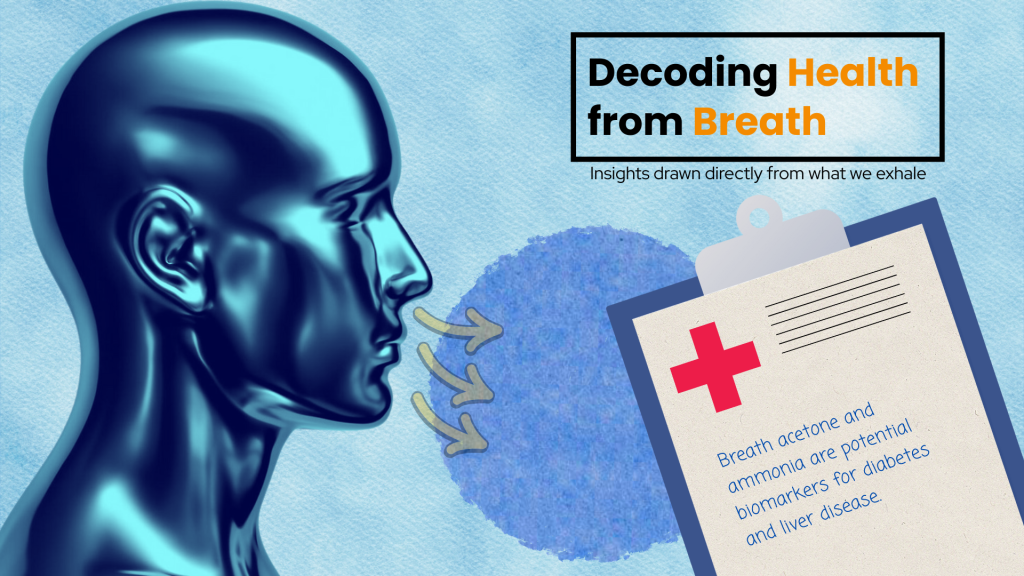
It has been found that breath acetone is a potential biomarker for diabetes, while breath ammonia is a potential biomarker for liver diseases.
The usual methods to monitor gases include gas chromatography (GC), semiconductor metal oxide (SMO), and electrochemical sensors (ECS). But these methods come with their own set of drawbacks. For example, gas chromatography, although highly selective and sensitive, is bulky, and the analysis duration is high.
Because of these drawbacks, scientists considered laser-assisted techniques because of their advantages, such as being selective, noninvasive, and sensitive, with a fast response time. However, even here, there were problems encountered.
For example, the most widely used method called a tunable diode laser absorption spectroscopy (TDLAS) tends to be bulky and nonportable. Therefore, an alternative method called photoacoustic spectroscopy (PAS) was considered.
PAS is widely used to measure gas concentration present in trace levels. Here, the light energy (photon energy) is converted to sound energy (acoustic). Basically, the PAS apparatus consists of a gas cell in which a broadband acoustic sensor (a microphone) is used to detect the sound waves. PAS has a high Q-factor (quality factor), which enables it to detect weak signals in a small gas sample volume.
But the PAS cell may not be ideal for breath gas analysis, as the sample volume required for analysis is large. Therefore, in this study, a quartz-enhanced photoacoustic spectroscopy (QEPAS) system was considered, where the microphone is replaced by a quartz tuning fork (QTF).
The advantages of this system are many – the narrow resonance frequency of QTF and tuning fork configuration improves the detector’s immunity to external acoustic noise, and also offers high selectivity. Due to the symmetric design of QTF, both background acoustic noise and sample-gas flow noise are also eliminated. In this study, the authors have used a QEPAS system with a quantum cascade laser (QCL) source to detect multiple gases in the mid-infrared region.
The major motivation of this work was to develop a tunable QEPAS setup that can be used to measure multiple gases from HEB samples.
The breath measurements of acetone for diabetes and ammonia for liver problems, were in agreement with the blood tests for the same. This technique could be a potential alternative to the existing invasive techniques for disease diagnosis and clinical applications. This method can be used to identify various other biomarkers in breath.
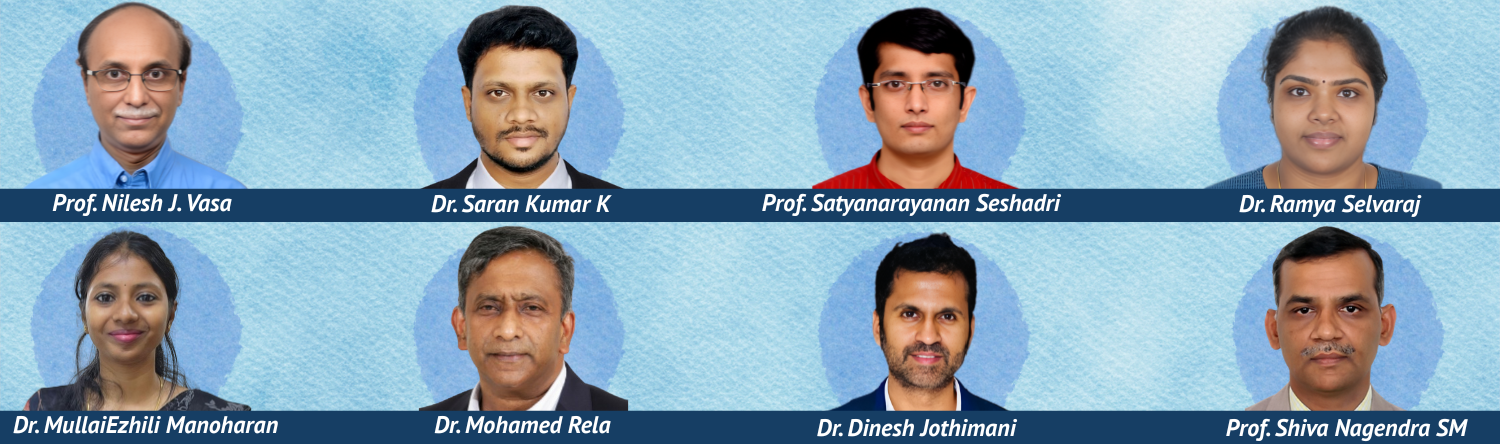
The following are the authors of this paper:
- Dr. Saran Kumar K from the Department of Engineering Design, Indian Institute of Technology (IIT) Madras, Chennai, India.
- Dr. Ramya Selvaraj, Assistant Professor at the Department of Electrical Engineering, National Institute of Technology Raipur, Raipur, India
- Dr. MullaiEzhili Manoharan from The Institute of Liver Disease and Transplantation, Dr. Rela Institute & Medical Center, Chennai, India
- Dr. Dinesh Jothimani from the Institute of Liver Disease and Transplantation, Dr. Rela Institute & Medical Center, Chennai, India
- Dr. Mohamed Rela from the Institute of Liver Disease and Transplantation, Dr. Rela Institute & Medical Center, Chennai, India
- Prof. Satyanarayanan Seshadri from the Department of Applied Mechanics, Indian Institute of Technology (IIT) Madras, Chennai, India
- Prof. Shiva Nagendra SM from the Department of Civil Engineering, Indian Institute of Technology (IIT) Madras, Chennai, India
- Prof. Nilesh J. Vasa from the Department of Engineering Design, Indian Institute of Technology (IIT) Madras, Chennai, India
Dr. Srivathsan Vasudevan, from the Department of Electrical Engineering, Indian Institute of Technology (IIT) Indore, Indore, India, pointed out the advantages of this study with the following comments: “Want to diagnose liver disorder / diabetes mellitus without pricking? A non-invasive, non-contact diagnostic method to perform diagnostics using breath analysis.
The proposed technique uses a novel method based on the principle of photoacoustics. Photoacoustics is a light-sound methodology to detect acetone and ammonia measurements. Unlike traditional techniques, here the detection happens using the breath analysis of the patient. Hence this will avoid a prick and can be a painless test. The researchers have developed a compact cost-effective setup that can lead to a possibility of a screening technique that can be used in rural areas of the country.”
Article by Akshay Anantharaman
Click here for the original link to the paper