Language is one of the most beautiful aspects of human essence and culture. Every language when uttered is like a different song to the ears. Animals cannot talk, but humans have the gift of conversing in numerous languages and dialects making our species very unique.
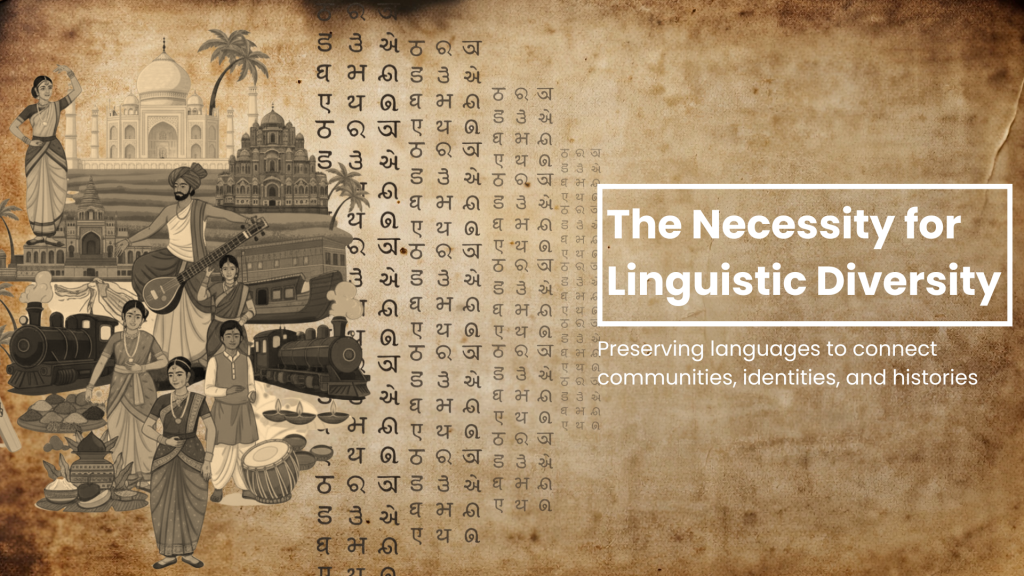
Languages embody culture and history. Each language carries a unique cultural context, and a distinct way of viewing the world, making it significant. A language is also shaped by centuries of history, making each language even more valuable.
Linguistic diversity is important because of various factors. Different languages broaden the perspectives of people and foster greater understanding and compassion for other cultures. Languages are repositories of traditional knowledge and stories, which when lost, can be a major loss to humanity. Using a student’s mother tongue at home also has a positive spillover effect on the student’s performance at school. Multilingual richness also promotes unity in diversity, as is seen in countries like India with a rich heritage of languages.
But the current situation of world languages is not very bright. In the last 500 years, half of the world’s known languages have disappeared. UNESCO (The United Nations Educational, Scientific and Cultural Organization) has mentioned that if the current situation continues, 90 % of the world’s languages will disappear by the end of this century.
In India too, PLSI (The People’s Linguistic Survey of India) claims that in the past 50 years, 250 languages have disappeared. Even though India still has a rich diversity of languages, this is rapidly diminishing. Therefore, in this alarming time when many languages are becoming lost, it is essential that linguists study endangered languages thoroughly, and suggest ways to save such languages.
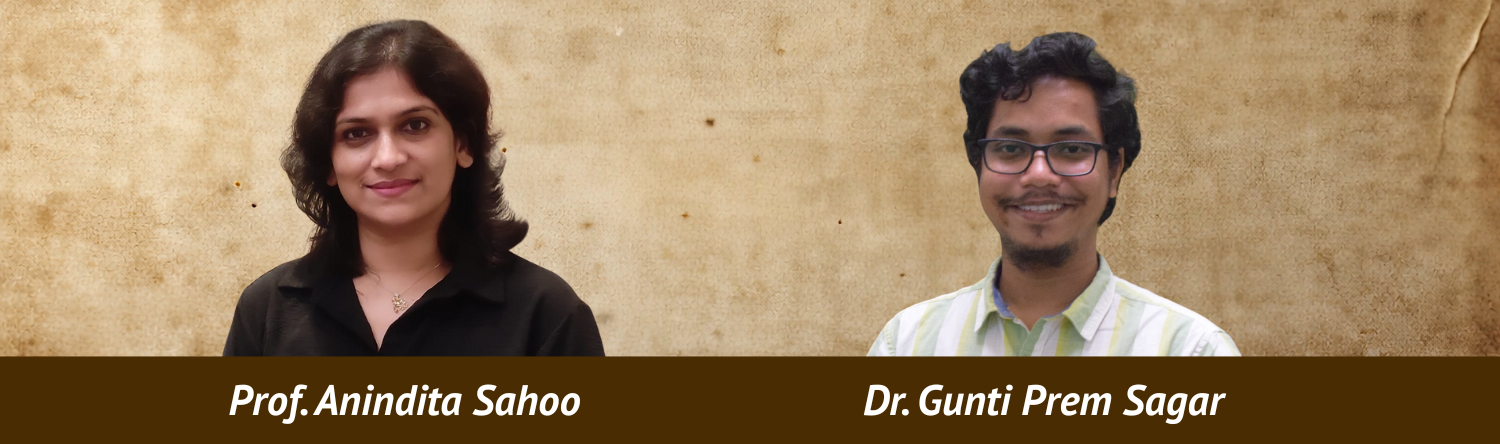
In this study, the authors Dr. Gunti Prem Sagar and Prof. Anindita Sahoo from the Department of Humanities and Social Sciences, Indian Institute of Technology (IIT) Madras, Chennai, India, have studied the Kuwi language, which is an Indigenous language spoken in certain regions of the state of Odisha and the state of Andhra Pradesh, India.
The basic question to be answered is – why does a language get endangered?
There are external factors like natural disasters, genocide, or the dominance of media that causes loss of speakers. There can also be internal factors like low-prestige feelings and negative attitudes to a language that cause its endangerment.
In India, there is a three-tiered hierarchy of multilinguism, also called the “double divide”. English is at the highest level, followed by dominant regional languages like Hindi or Telugu. Even between English and the dominant regional languages there is a significant divide. At the third level, come Indigenous/Tribal/minority languages such as Kuwi, Gondi, and Konda.
In the case of Kuwi, there are several factors for its endangerment. Political repression, where the government promotes a single official language and restricts the use of Indigenous languages in the public domain, including media and schools is one reason. Social and economic hegemony (domination) of the dominant languages is another reason.
Urbanization and industrialization also play a role in the endangerment of Kuwi. But it is the attitude of its own people towards its language that is causing more harm to it. Feelings of Kuwi being uneducated, inferior, inelegant, and so on, are causing a shift of the people towards more dominant languages.
Language endangerment is measured at different levels and characterized by various assessment tools depending on several parameters. In the case of assessment of Kuwi, the authors of this study have considered two assessment tools – UNESCO and EGIDS (The Expanded Graded Intergenerational Disruption Scale).
UNESCO has a nine-parameter framework to assess the health of a language. This tool evaluates all factors on a scale of 0 to 5, where 0 indicates that the language is extinct, and 5 indicates that the language is safe. These nine factors also present a sociolinguistic profile/ status/language situation, and they also explain the revitalization needs, urgency of documentation, language maintenance level, and so on.
EGIDS combines tools such as UNESCO Fishman’s GIDS, and Ethnologue. However, in EGIDS, some parameters are neglected. It has thirteen levels.
A comparison of EGIDS and UNESCO tools shows that EGIDS has more levels at the higher end. EGIDS has international, national, regional, and trade levels. However, EGIDS does not consider many of the factors of the UNESCO tool.
Upon using these two tools, UNESCO tool keeps Kuwi in the “endangered” category, while EGIDS keeps Kuwi in the “safe” category. The huge difference that has emerged from these tools lies in the hierarchical nature of the factors. The five evaluation questions of EGIDS are reducible to one threshold parameter, intergenerational transmission.
As one researcher puts it, UNESCO allows the evaluator to pinpoint and act on the most problematic areas, while EGIDS can be used to get a rough estimate at a faster rate.
Despite drawbacks in both the tools, the authors of this study decided to accept the results of the UNESCO tool for evaluating Kuwi. The UNESCO tool was found to be more useful and effective in assessing a language.
The main purpose of this paper was to identify the level of endangerment of the Kuwi language, the need for revitalization programs, and the urgency of documentation. Applying the UNESCO tool, the researchers observed that Kuwi can be considered endangered. It was also concluded that Kuwi needs revitalization programs as the documentation level was low.
As Kuwi remains in the “definitively endangered” category, there should be more focus on programs or schemes to improve the situation of Kuwi. The literacy level in the community is also low, which is a cause for concern. There are only a few graduates, and most children dropout of school early on. Therefore, it will be necessary to focus more on establishing MLE (Multilingual Education) schools that can provide education in the mother tongue. Community members should be encouraged to use their language in more domains like social media [YouTube channels, X (Twitter) posts, etc.]. Governmental patronage and welfare schemes to uplift this language are also much needed. The authors also consider providing financial support to MLE schools with respect to teaching materials, teacher training, and other measures, that might generate positive attitude among native community speakers.
A healthy language contributes to a healthy world by maintaining diversity and Indigenous knowledge, but a dead language wipes out part of the human knowledge system. It is therefore necessary to consider a cluster of parameters to measure and assess the vitality/health of a language.
Prof. (Dr.) Kavita Rastogi, Former Head, Department of Linguistics, University of Lucknow, Lucknow, India [Prof. (Dr.) Kavita Rastogi is also President (Hon.), Society for Endangered and Lesser-Known Languages (SEL), Lucknow] , gave her analysis of the work done by the authors and acknowledged its importance with the following comments: “This paper presents a comprehensive evaluation of the vitality of the Indigenous Kuwi language, and offers a critical comparison between the UNESCO and EGIDS assessment frameworks. Drawing on both fieldwork data and theoretical perspectives, the authors effectively illustrate the challenges that endangered languages face in multilingual settings such as India. While the paper rightly underscores the importance of documentation and revitalization initiatives, it also points out the shortcomings of both models—particularly the EGIDS framework’s tendency to oversimplify and the UNESCO model’s relative complexity. Nonetheless, the study could be strengthened by proposing more practical revitalization measures and exploring the sociopolitical dynamics influencing language vitality in greater depth. Overall, the paper is a valuable contribution to language endangerment studies and underscores the urgency of preserving linguistic diversity.”
Article by Akshay Anantharaman
Click here for the original link to the paper